
Grapes Nutrition Facts
Complete grapes nutrition breakdown with 69 kcal per 100g, glycemic index, and diet compatibility.
Written by Victura Nutrition TeamReviewed by Victura Editorial ReviewLast updated Aug 10, 2026
69
Calories
0.7g
Protein
18.1g
Carbs
Use caution
Is it healthy?
per 100g · per panel values
Track this food in VicturaQuick answer
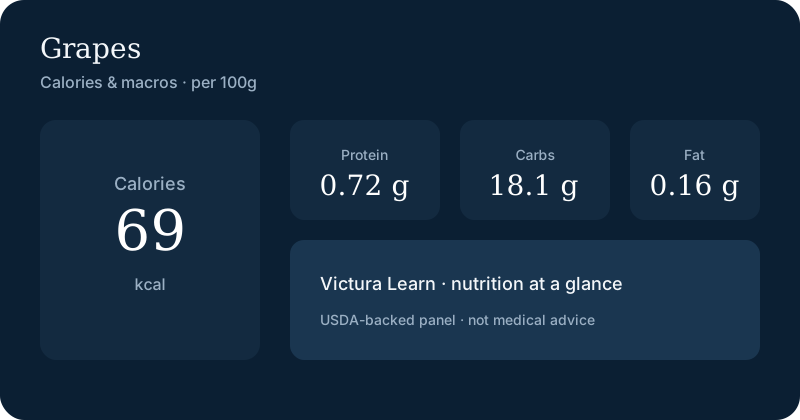
A 100g serving of grapes provides about 69 kcal. Per 100g you get about 18.1g carbs and 0.72g protein. Glycemic index is around 59.
Grapes is a whole food with approximately 69 calories per 100g, tracked in Victura for macro-aware meal logging.
- Calories (100g serving)
- 69 kcal
- Carbs (100g)
- 18.1g
- Protein (100g)
- 0.72g
- Serving reference
- 100g · 100g serving
- Glycemic index
- 59

Where the calories come from
Per 100g · protein & carbs 4 kcal/g, fat 9 kcal/g
- Protein0.7 g · 3.8%
- Carbs18.1 g · 94.4%
- Fat0.2 g · 1.9%
Serving calculator
How much did you eat or drink — Grapes?
69
Calories
0.7g
Protein
18.1g
Carbs
0.2g
Fat
Nutrition facts
per 100g · Source: USDA FoodData Central (seeded Phase 0)
69 kcal
Calories
Vitamins
- Vitamin C: 3.2mg
Minerals
- Potassium: 191mg
Scientific explanation
Research-backedGrapes provides approximately 69 calories (kcal) per 100g serving, making them a moderately energy-dense fruit. A standard cup of raw grapes (approximately 150g) delivers about 104 calories. Looking closely at the macronutrient distribution, a 100g portion contains 18.1g of total carbohydrates, of which 15.48g are simple sugars (primarily fructose and glucose), and 0.9g is dietary fiber. This leaves a net carbohydrate count of approximately 17.2g. The protein content is minimal at 0.72g, and total lipids (fats) are negligible at 0.16g. From a micronutrient perspective, grapes offer modest amounts of essential vitamins and minerals. A 100g serving provides 191mg of potassium (representing approximately 4% of the Daily Value), which plays a vital role in maintaining systemic fluid balance, regulating blood pressure, and supporting neuromuscular function. Additionally, grapes contain 3.2mg of Vitamin C (4% of the Daily Value), an essential water-soluble antioxidant that supports immune defense, collagen synthesis, and cellular repair. The glycemic index (GI) of grapes is estimated at 59, placing them in the medium-to-high glycemic category. Because of the relatively high sugar-to-fiber ratio, consuming grapes in isolation can lead to a rapid rise in blood glucose levels. This glycemic response is particularly important for individuals managing type 2 diabetes or insulin resistance. However, grapes are also rich in bioactive polyphenols, most notably resveratrol, anthocyanins, and catechins. These phytochemicals, concentrated primarily in the skins and seeds of red and purple grape varieties, have been studied extensively for their potential to mitigate oxidative stress, support cardiovascular health, and improve endothelial function. To optimize metabolic health, clinical guidelines suggest pairing grapes with healthy fats or proteins to slow gastric emptying and blunt the postprandial glucose spike.

Community insights
Community insightWithin the Victura community and anonymized meal logs, grapes are highly favored as a convenient, portable, and naturally sweet snack. Analysis of user behavior shows that grapes are frequently logged as a mid-afternoon energy booster or as a refreshing addition to pre-workout meals. However, many users tracking their blood glucose or adhering to low-carbohydrate diets note that eating grapes alone can lead to a quick energy spike followed by a mild crash. To counter this, the most successful dietary patterns logged in the Victura app involve strategic food pairing. Users frequently pair grapes with Greek yogurt, cottage cheese, walnuts, or almonds. The addition of dietary protein and healthy fats helps slow down digestion, providing a much more sustained release of energy. Another popular community trend is freezing grapes. Frozen grapes are widely used as a low-calorie, portion-controlled alternative to processed desserts, offering a satisfying texture that takes longer to consume, which naturally aids in mindful eating. In culinary logs, grapes are also utilized to add natural sweetness to savory dishes, such as chicken salads or roasted Brussels sprouts, reducing the need for added refined sugars.
Pros
- Grapes is a whole food with measurable macro nutrients
- Rich in protective antioxidants like resveratrol
- Excellent hydration source due to high water content
Cons
- Portion size still matters for calorie goals
- Relatively high sugar-to-fiber ratio
- Can cause rapid blood sugar spikes if eaten in isolation
Best time to eat
Pair with protein and fiber for balanced meals.
Good windows
- With main meals
- Pre-workout for quick energy
Consider avoiding
- Very large portions without activity
- Late at night in isolation if managing insulin resistance
Diet compatibility
Weight loss
Use caution
At 69 kcal and 0.9g fiber per 100g, this food is energy-dense - watch portions.
Keto
Use caution
Net carbs ~17.2g per 100g - too high-carb for standard keto.
Diabetic friendly
Use caution
GI 59 with 15.5g sugar - may spike glucose - pair with protein/fat.
Frequently asked questions
People also ask
Is a grapes healthy?
Yes — a grapes is a whole food with measurable nutrients. Healthiness depends on overall diet, portions, and your goals. Estimated GI is 59.
Can I eat a grapes every day?
Most people can include a grapes daily as part of a balanced diet, as long as total calories and carbs fit their plan.
Are Grapeses good for weight loss?
At 69 kcal and 0.9g fiber per 100g, this food is energy-dense - watch portions.
How many calories are in a grapes?
A typical medium serving of grapes has about 69 calories, while 100g contains about 69 calories (USDA reference).
Are Grapeses good before a workout?
Grapeses can work before activity when you want easy carbs; pair a grapes with protein if your session is long.
Are Grapeses high in sugar?
Grapeses contain about 15.5g sugar per 100g — mostly natural sugars when whole.
Is grapes good for weight loss?
Yes, grapes can be integrated into a weight loss plan when used as a direct replacement for high-calorie, processed desserts. Their high water content helps with volume eating, but because they contain 69 calories per 100g and very little fiber, they do not promote satiety as effectively as high-fiber fruits like apples or raspberries. Keep portions to a controlled cup.
Is grapes keto-friendly?
No, grapes are generally not considered keto-friendly. With net carbs of approximately 17.2g per 100g, even a small handful of grapes can easily consume a large portion of your daily carbohydrate limit (typically 20-50g) on a standard ketogenic diet.
What is the glycemic index of grapes?
The estimated glycemic index (GI) of grapes is 59, which falls into the medium range. This means they can cause a moderate to rapid rise in blood sugar levels. To minimize this effect, it is highly recommended to pair grapes with a source of protein or healthy fat.
Is grapes safe for people with diabetes?
Yes, people with diabetes can eat grapes, but portion control and pairing are essential. Since grapes have a GI of 59 and contain 15.48g of sugar per 100g, eating them in isolation can cause blood glucose spikes. Pairing them with cheese, nuts, or seeds helps slow down carbohydrate absorption.
How many calories do grapes have?
Grapes contain 69 calories (kcal) per 100g serving. A standard cup of grapes (approximately 150g) provides about 104 calories, making them a moderately energy-dense fruit where portion control is key.
How we review this guide
- Written by
- Victura Nutrition Team
- Reviewed by
- Victura Editorial Review
- Reference sources
- 4
- Last updated
- Aug 10, 2026
References
Ready to track your meals with AI?
Victura scans your plate, logs macros automatically, and coaches you toward your goals — halal, keto, diabetic-friendly, and more.