
Grapefruit Nutrition Facts
Complete grapefruit nutrition breakdown with 42 kcal per 100g, glycemic index, and diet compatibility.
Written by Victura Nutrition TeamReviewed by Victura Editorial ReviewLast updated Aug 10, 2026
42
Calories
0.8g
Protein
10.7g
Carbs
Generally yes
Is it healthy?
per 100g · per panel values
Track this food in VicturaQuick answer
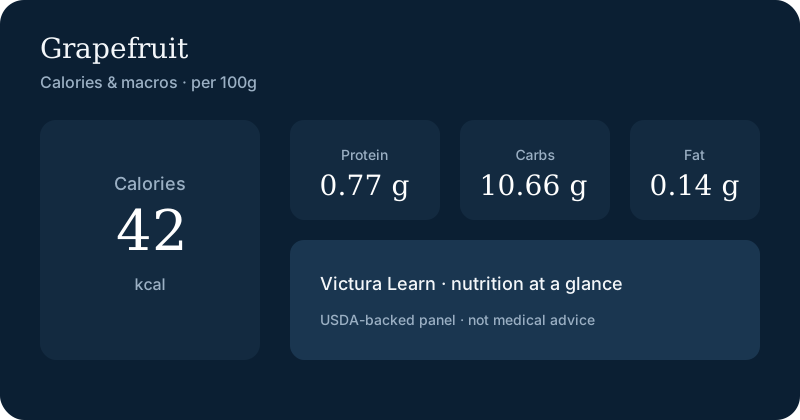
A 100g serving of grapefruit provides about 42 kcal. Per 100g you get about 10.66g carbs and 0.77g protein. Glycemic index is around 25.
Grapefruit is a whole food with approximately 42 calories per 100g, tracked in Victura for macro-aware meal logging.
- Calories (100g serving)
- 42 kcal
- Carbs (100g)
- 10.66g
- Protein (100g)
- 0.77g
- Serving reference
- 100g · 100g serving
- Glycemic index
- 25

Where the calories come from
Per 100g · protein & carbs 4 kcal/g, fat 9 kcal/g
- Protein0.8 g · 6.6%
- Carbs10.7 g · 90.8%
- Fat0.1 g · 2.7%
Serving calculator
How much did you eat or drink — Grapefruit?
42
Calories
0.8g
Protein
10.7g
Carbs
0.1g
Fat
Nutrition facts
per 100g · Source: USDA FoodData Central (seeded Phase 0)
42 kcal
Calories
Vitamins
- Vitamin C: 31.2mg
Minerals
- Potassium: 135mg
Scientific explanation
Research-backedGrapefruit provides a highly nutritious, low-calorie profile that fits exceptionally well into health-conscious dietary patterns. At just 42 calories (kcal) per 100 grams, it is an outstanding volume food, allowing individuals to consume a satisfying portion size without exceeding their daily energy budget. A typical medium-sized whole grapefruit (weighing approximately 120 grams of edible portion) provides roughly 50 calories, while a larger specimen (around 150 grams) delivers about 63 calories. From a macronutrient perspective, grapefruit is naturally virtually fat-free, containing a negligible 0.14 grams of lipid per 100 grams. Its protein content is similarly modest at 0.77 grams per 100 grams, which is typical for citrus fruits. The carbohydrate profile is the primary source of its energy, yielding 10.66 grams per 100 grams. Of this carbohydrate content, 6.89 grams consist of naturally occurring sugars—primarily a mix of fructose, glucose, and sucrose—while 1.6 grams are present as dietary fiber. The fiber in grapefruit is largely soluble, particularly in the form of pectin, which plays a crucial role in slowing down digestion, promoting satiety, and supporting healthy cholesterol levels. The micronutrient density of grapefruit is highlighted by its exceptional Vitamin C content. Providing 31.2 milligrams of Vitamin C per 100 grams, a single 100-gram serving satisfies approximately 35% of the Daily Value (DV) for this essential antioxidant. Vitamin C is vital for immune function, collagen synthesis, and protecting cells from oxidative stress. Additionally, grapefruit contains 135 milligrams of potassium per 100 grams (3% DV), an essential mineral and electrolyte that supports healthy blood pressure regulation, fluid balance, and nerve transmission. The glycemic index (GI) of grapefruit is remarkably low, estimated at 25. This low GI status indicates that the carbohydrates in grapefruit are digested and absorbed slowly, preventing rapid spikes in blood glucose. This makes it an excellent fruit choice for individuals managing diabetes or insulin sensitivity. Furthermore, pink and red grapefruits contain lycopene, a powerful carotenoid antioxidant associated with cardiovascular health. However, consumers should be aware that grapefruit contains furanocoumarins, compounds that can inhibit the CYP3A4 enzyme in the gut, thereby altering the metabolism of certain prescription medications. Anyone taking medication should consult their healthcare provider regarding potential interactions.

Community insights
Community insightWithin the Victura community and anonymized meal logs, grapefruit is frequently utilized as a vibrant, refreshing component of breakfast routines and mid-day snacks. Many users log grapefruit alongside a source of lean protein or healthy fat—such as Greek yogurt, cottage cheese, or a handful of raw almonds. This pairing strategy is highly recommended by nutritionists, as the addition of protein and fat further blunts the glycemic response and significantly extends satiety compared to consuming the fruit in isolation. Another popular community trend is incorporating fresh grapefruit segments into savory salads, pairing the tart citrus with baby spinach, avocado, and grilled chicken. This combination not only enhances the absorption of non-heme iron from the spinach due to the high Vitamin C content of the grapefruit but also creates a highly satisfying, nutrient-dense meal. Some users also report enjoying warm, broiled grapefruit lightly dusted with ginger or cinnamon as a low-calorie dessert alternative that curbs sweet cravings without destabilizing blood sugar levels.
Pros
- Grapefruit is a whole food with measurable macro nutrients
- Extremely low calorie density, ideal for weight management
- High in Vitamin C (35% DV per 100g) and beneficial antioxidants like lycopene
Cons
- Portion size still matters for calorie goals
- Contains furanocoumarins which can interact with certain prescription medications
- Too high in net carbohydrates for strict ketogenic diets
Best time to eat
Pair with protein and fiber for balanced meals.
Good windows
- With breakfast
- Pre-workout snack (45-60 mins prior)
- With main meals
Consider avoiding
- Very large portions without activity
- Directly before taking medications sensitive to CYP3A4 inhibition
Diet compatibility
Weight loss
Friendly
At 42 kcal and 1.6g fiber per 100g, this food has a very low energy density, making it excellent for satiety.
Keto
Use caution
Net carbs ~9.1g per 100g - too high-carb for standard keto.
Diabetic friendly
Friendly
GI 25 with 6.9g sugar - generally blood-sugar friendly in moderation.
Frequently asked questions
People also ask
Is a grapefruit healthy?
Yes — a grapefruit is a whole food with measurable nutrients. Healthiness depends on overall diet, portions, and your goals. Estimated GI is 25.
Can I eat a grapefruit every day?
Most people can include a grapefruit daily as part of a balanced diet, as long as total calories and carbs fit their plan.
Are Grapefruits good for weight loss?
At 42 kcal and 1.6g fiber per 100g, this food has a very low energy density, making it excellent for satiety.
How many calories are in a grapefruit?
A typical medium serving of grapefruit has about 42 calories, while 100g contains about 42 calories (USDA reference).
Are Grapefruits good before a workout?
Grapefruits can work before activity when you want easy carbs; pair a grapefruit with protein if your session is long.
Are Grapefruits high in sugar?
Grapefruits contain about 6.9g sugar per 100g — mostly natural sugars when whole.
Is grapefruit keto-friendly?
Grapefruit is generally not considered keto-friendly. With approximately 9.06 grams of net carbohydrates per 100 grams (10.66g total carbs minus 1.6g fiber), a standard serving of grapefruit would consume a significant portion of a typical 20-to-50-gram daily keto carb limit. While small portions (such as a few segments) can occasionally fit, other low-sugar berries are usually preferred on a strict ketogenic diet.
What is the glycemic index of grapefruit?
The glycemic index (GI) of grapefruit is estimated to be 25, which classifies it as a very low-glycemic food. This means it has a minimal and gradual impact on blood sugar levels. To further stabilize your glucose response, you can pair grapefruit with a source of protein or healthy fat, such as walnuts or unsweetened Greek yogurt.
Is grapefruit safe for people with diabetes?
Yes, grapefruit is generally safe and highly suitable for people with diabetes when consumed in moderation. Its low glycemic index of 25 and moderate sugar content (6.89g per 100g) mean it is unlikely to cause rapid blood sugar spikes. However, individuals with diabetes should monitor their portion sizes and consult their physician regarding any potential interactions with diabetes medications.
How many calories does a grapefruit have?
A raw grapefruit contains 42 calories (kcal) per 100 grams. A typical medium-sized whole grapefruit (approx. 120g of edible portion) provides about 50 calories, making it an excellent low-calorie snack.
How we review this guide
- Written by
- Victura Nutrition Team
- Reviewed by
- Victura Editorial Review
- Reference sources
- 4
- Last updated
- Aug 10, 2026
References
Ready to track your meals with AI?
Victura scans your plate, logs macros automatically, and coaches you toward your goals — halal, keto, diabetic-friendly, and more.