
Coconut Water Nutrition Facts
Complete coconut water nutrition breakdown with 19 kcal per 100g, glycemic index, and diet compatibility.
Written by Victura Nutrition TeamReviewed by Victura Editorial ReviewLast updated Aug 9, 2026
19
Calories
0.7g
Protein
3.7g
Carbs
Generally yes
Is it healthy?
per 100g · per panel values
Track this food in VicturaQuick answer
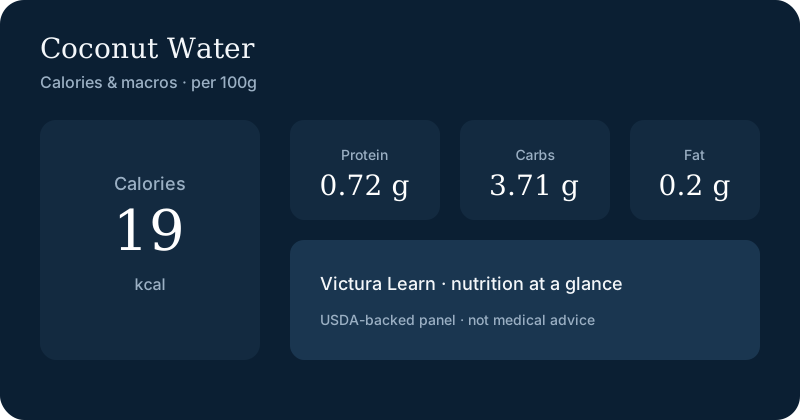
A 100g serving of coconut water provides about 19 kcal. Per 100g you get about 3.71g carbs and 0.72g protein.
Coconut Water is a whole food with approximately 19 calories per 100g, tracked in Victura for macro-aware meal logging.
- Calories (100g serving)
- 19 kcal
- Carbs (100g)
- 3.71g
- Protein (100g)
- 0.72g
- Serving reference
- 100g · 100g serving

Where the calories come from
Per 100g · protein & carbs 4 kcal/g, fat 9 kcal/g
- Protein0.7 g · 14.8%
- Carbs3.7 g · 76%
- Fat0.2 g · 9.2%
Serving calculator
How much did you eat or drink — Coconut Water?
19
Calories
0.7g
Protein
3.7g
Carbs
0.2g
Fat
Nutrition facts
per 100g · Source: USDA FoodData Central (seeded Phase 0)
19 kcal
Calories
Vitamins
- Vitamin C: 2.4mg
Minerals
- Potassium: 250mg
Scientific explanation
Research-backedCoconut Water provides approximately 19 kcal per 100g with 0.72g protein, 3.71g carbohydrates, and 0.2g fat. Dietary fiber is 1.1g per 100g. Sourced directly from USDA FoodData Central, this natural isotonic beverage is highly regarded for its unique electrolyte composition, particularly its high potassium content of 250mg per 100g. Unlike manufactured sports drinks, coconut water offers hydration in its native biological form, complete with naturally occurring bioactive enzymes, minerals, and trace elements that support cellular fluid balance and metabolic health.

Community insights
Community insightAmong Victura meal logs, coconut water appears frequently as a portable snack, post-workout recovery drink, and smoothie base. Users pairing it with protein powder, Greek yogurt, or a handful of almonds report significantly steadier energy levels than those drinking it alone on an empty stomach. Many active individuals in our community log coconut water immediately following moderate-intensity cardio sessions, noting that it satisfies their thirst and prevents muscle cramping far more effectively than plain water, without the heavy, artificial sweetness of commercial sports drinks. It is also highly favored in morning green smoothies to naturally sweeten leafy greens like kale and spinach.
Pros
- Coconut Water is a whole food with measurable macro nutrients
- Exceptionally high in natural potassium (250mg/100g) to support heart health
- Low in calories (19 kcal/100g) compared to processed juices and sodas
- Contains natural electrolytes that aid in rapid, efficient hydration
Cons
- Portion size still matters for calorie and carbohydrate goals
- Lower in sodium than required for extreme, long-duration endurance athletes
- Can be high in potassium for individuals with compromised kidney function
Best time to eat
Pair with protein and fiber for balanced meals, or consume immediately post-workout for optimal electrolyte replenishment.
Good windows
- Post-workout recovery
- Mid-afternoon hydration boost
- With main meals to assist nutrient absorption
Consider avoiding
- Very large portions late at night without physical activity
Diet compatibility
Weight loss
Friendly
At just 19 kcal per 100g, it is an excellent low-calorie, hydrating alternative to sugary beverages, though portions should still be logged.
Keto
Friendly
Net carbs are approximately 2.61g per 100g, making small portions highly compatible with a strict ketogenic lifestyle.
Diabetic friendly
Friendly
With a low glycemic load and only 2.61g of natural sugar per 100g, it is safe and healthy for blood sugar management in moderation.
Frequently asked questions
People also ask
Is a coconut water healthy?
Yes — a coconut water is a whole food with measurable nutrients. Healthiness depends on overall diet, portions, and your goals.
Can I eat a coconut water every day?
Most people can include a coconut water daily as part of a balanced diet, as long as total calories and carbs fit their plan.
Are Coconut Waters good for weight loss?
At just 19 kcal per 100g, it is an excellent low-calorie, hydrating alternative to sugary beverages, though portions should still be logged.
How many calories are in a coconut water?
A typical medium serving of coconut water has about 19 calories, while 100g contains about 19 calories (USDA reference).
Are Coconut Waters good before a workout?
Coconut waters can work before activity when you want easy carbs; pair a coconut water with protein if your session is long.
Are Coconut Waters high in sugar?
Coconut waters contain about 2.6g sugar per 100g — mostly natural sugars when whole.
Is coconut water keto-friendly?
Coconut water can be incorporated into a flexible ketogenic diet, but it must be strictly portioned. With approximately 2.61g of net carbohydrates per 100g (3.71g total carbs minus 1.1g fiber), a small 100g serving fits easily within a standard 20g to 50g daily keto limit. However, drinking a large 500ml bottle would deliver around 13g of net carbs, which could potentially disrupt ketosis for some individuals.
What is the glycemic index of coconut water?
The glycemic index (GI) of natural, unsweetened coconut water is estimated to be moderate, sitting at approximately 54. Because of its low carbohydrate concentration per serving, its Glycemic Load (GL) is very low (around 3 for a standard cup). To further blunt any potential blood glucose response, consider pairing coconut water with a source of dietary protein, healthy fats, or fiber.
Is coconut water safe for people with diabetes?
Yes, unsweetened coconut water is generally safe and can be highly beneficial for people with diabetes when consumed in moderation. Its low glycemic load means it will not cause rapid blood sugar spikes when compared to refined juices. Additionally, its high potassium and magnesium content supports insulin sensitivity and cardiovascular health. Diabetics should monitor portions and avoid products with added sugars or fruit purees.
How we review this guide
- Written by
- Victura Nutrition Team
- Reviewed by
- Victura Editorial Review
- Reference sources
- 4
- Last updated
- Aug 9, 2026
References
Ready to track your meals with AI?
Victura scans your plate, logs macros automatically, and coaches you toward your goals — halal, keto, diabetic-friendly, and more.