
Cantaloupe Nutrition Facts
Complete cantaloupe nutrition breakdown with 34 kcal per 100g, glycemic index, and diet compatibility.
Written by Victura Nutrition TeamReviewed by Victura Editorial ReviewLast updated Aug 10, 2026
34
Calories
0.8g
Protein
8.2g
Carbs
Generally yes
Is it healthy?
per 100g · per panel values
Track this food in VicturaQuick answer
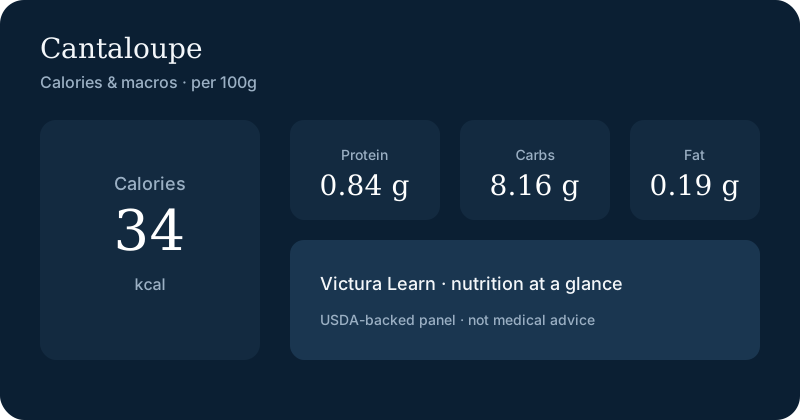
A 100g serving of cantaloupe provides about 34 kcal. Per 100g you get about 8.16g carbs and 0.84g protein. Glycemic index is around 65.
Cantaloupe is a whole food with approximately 34 calories per 100g, tracked in Victura for macro-aware meal logging.
- Calories (100g serving)
- 34 kcal
- Carbs (100g)
- 8.16g
- Protein (100g)
- 0.84g
- Serving reference
- 100g · 100g serving
- Glycemic index
- 65

Where the calories come from
Per 100g · protein & carbs 4 kcal/g, fat 9 kcal/g
- Protein0.8 g · 8.9%
- Carbs8.2 g · 86.6%
- Fat0.2 g · 4.5%
Serving calculator
How much did you eat or drink — Cantaloupe?
34
Calories
0.8g
Protein
8.2g
Carbs
0.2g
Fat
Nutrition facts
per 100g · Source: USDA FoodData Central (seeded Phase 0)
34 kcal
Calories
Vitamins
- Vitamin A: 169mcg RAE
- Vitamin C: 36.7mg
Minerals
- Potassium: 267mg
Scientific explanation
Research-backedCantaloupe provides a rich matrix of essential micronutrients, hydration, and dietary fiber within a low-calorie framework. Sourced from USDA FoodData Central, 100 grams of raw cantaloupe delivers exactly 34 calories, 0.84 grams of protein, 0.19 grams of fat, and 8.16 grams of total carbohydrates. Of these carbohydrates, 7.86 grams are simple sugars (fructose, glucose, and sucrose), while 0.9 grams are dietary fiber. This high water content (approximately 90%) contributes to its low energy density, making it an exceptional option for volume eating and hydration. From a micronutrient perspective, cantaloupe is an outstanding source of provitamin A and vitamin C. A 100-gram serving provides 169 mcg RAE of Vitamin A (primarily as beta-carotene), which represents roughly 19% of the Daily Value (DV). This fat-soluble vitamin is critical for maintaining healthy vision, immune function, and cellular communication. Additionally, cantaloupe contains 36.7 mg of Vitamin C per 100g, fulfilling 41% of the Daily Value. Vitamin C acts as a powerful antioxidant, protecting cells from oxidative damage, supporting collagen synthesis, and enhancing non-heme iron absorption. The mineral profile is highlighted by potassium, with 100g of cantaloupe providing 267 mg (6% DV). Potassium is a vital electrolyte that regulates fluid balance, nerve signals, and muscle contractions. The glycemic index (GI) of cantaloupe is estimated at 65, placing it in the medium-to-high range. However, because its carbohydrate density is low (only 8.16g per 100g), its glycemic load (GL) is low (around 4 for a typical serving). This means that while the sugars in cantaloupe are absorbed relatively quickly, a standard portion does not contain enough total carbohydrates to cause a dramatic blood glucose spike in healthy individuals.

Community insights
Community insightAmong Victura meal logs, cantaloupe appears frequently as a portable snack, a refreshing breakfast topper, and a popular smoothie ingredient. Many users log cantaloupe during the summer months as a post-workout rehydration aid. Editorial synthesis of community data reveals that users who pair cantaloupe with a protein source, such as cottage cheese or a handful of walnuts, report significantly steadier energy levels and prolonged satiety compared to those who consume the melon alone on an empty stomach. It is also frequently utilized in meal prep, pre-sliced and stored for quick, hydrating snacks throughout the workweek.
Pros
- Cantaloupe is a whole food with measurable macro nutrients
- Extremely high in Vitamin A and Vitamin C
- High water content supports hydration and volume eating
Cons
- Portion size still matters for calorie goals
- Moderate glycemic index (65) may cause rapid sugar absorption if eaten alone
Best time to eat
Pair with protein and fiber for balanced meals.
Good windows
- With main meals
- Pre-workout for quick energy
- Post-workout for hydration and glycogen replenishment
Consider avoiding
- Very large portions without activity
- Eating alone on an empty stomach if managing insulin resistance
Diet compatibility
Weight loss
Friendly
At 34 kcal and 0.9g fiber per 100g, this food is highly volume-dense and hydrating.
Keto
Use caution
Net carbs ~7.3g per 100g - too high-carb for standard keto.
Diabetic friendly
Use caution
GI 65 with 7.9g sugar - may spike glucose - pair with protein/fat.
Frequently asked questions
People also ask
Is a cantaloupe healthy?
Yes — a cantaloupe is a whole food with measurable nutrients. Healthiness depends on overall diet, portions, and your goals. Estimated GI is 65.
Can I eat a cantaloupe every day?
Most people can include a cantaloupe daily as part of a balanced diet, as long as total calories and carbs fit their plan.
Are Cantaloupes good for weight loss?
At 34 kcal and 0.9g fiber per 100g, this food is highly volume-dense and hydrating.
How many calories are in a cantaloupe?
A typical medium serving of cantaloupe has about 34 calories, while 100g contains about 34 calories (USDA reference).
Are Cantaloupes good before a workout?
Cantaloupes can work before activity when you want easy carbs; pair a cantaloupe with protein if your session is long.
Are Cantaloupes high in sugar?
Cantaloupes contain about 7.9g sugar per 100g — mostly natural sugars when whole.
Is cantaloupe good for weight loss?
Yes, cantaloupe is an excellent food for weight loss. With only 34 calories per 100g, it is a low-energy-density, high-volume food. This means you can eat a large, satisfying portion (such as a cup of diced melon for about 53 calories) to help keep you full without consuming excess calories. The high water content (90%) also promotes satiety. While it contains 0.9g of fiber per 100g, pairing it with a fiber-rich or protein-rich food can further enhance its weight-loss benefits by keeping you full for longer.
Is cantaloupe keto-friendly?
Cantaloupe is generally not considered keto-friendly. With 8.16g of total carbohydrates and 0.9g of fiber per 100g, it yields approximately 7.26g of net carbs per 100g serving. A standard one-cup serving contains over 11 grams of net carbs, which can easily take up a significant portion of a daily 20g to 50g keto carbohydrate limit. If you are on a strict ketogenic diet, you should limit your intake to very small portions (e.g., a few small cubes) or opt for lower-carb fruits like raspberries or blackberries.
What is the glycemic index of cantaloupe?
The glycemic index (GI) of cantaloupe is estimated to be 65, which falls into the medium-to-high range. This means that the simple sugars in cantaloupe can be absorbed relatively quickly into the bloodstream. However, because its overall carbohydrate concentration is low (only 8.16g per 100g), its glycemic load (GL) is very low (around 4 for a standard serving). To minimize any potential blood sugar spikes, pair it with a protein or fat source.
Is cantaloupe safe for people with diabetes?
Yes, cantaloupe is safe for people with diabetes when consumed in moderation and managed carefully. Although it has a glycemic index of 65 and contains 7.86g of sugar per 100g, its low glycemic load means it won't cause a rapid spike if eaten in controlled portions. To maintain stable blood glucose levels, individuals with diabetes should limit their portion size to one cup or less at a time and pair the melon with a protein or healthy fat, such as Greek yogurt, cheese, or nuts.
How many calories does cantaloupe have?
Cantaloupe contains exactly 34 calories (kcal) per 100 grams. A standard one-cup serving of diced cantaloupe (approximately 156g) provides about 53 calories. This exceptionally low calorie count, combined with its high water content and rich nutritional profile, makes it an ideal snack for anyone looking to satisfy a sweet craving while maintaining a calorie deficit.
How we review this guide
- Written by
- Victura Nutrition Team
- Reviewed by
- Victura Editorial Review
- Reference sources
- 4
- Last updated
- Aug 10, 2026
References
Ready to track your meals with AI?
Victura scans your plate, logs macros automatically, and coaches you toward your goals — halal, keto, diabetic-friendly, and more.