
Avocado Nutrition Facts
Complete avocado nutrition breakdown with 160 kcal per 100g, glycemic index, and diet compatibility.
Written by Victura Nutrition TeamReviewed by Victura Editorial ReviewLast updated Aug 10, 2026
160
Calories
2.0g
Protein
8.5g
Carbs
Use caution
Is it healthy?
per 100g · per panel values
Track this food in VicturaQuick answer
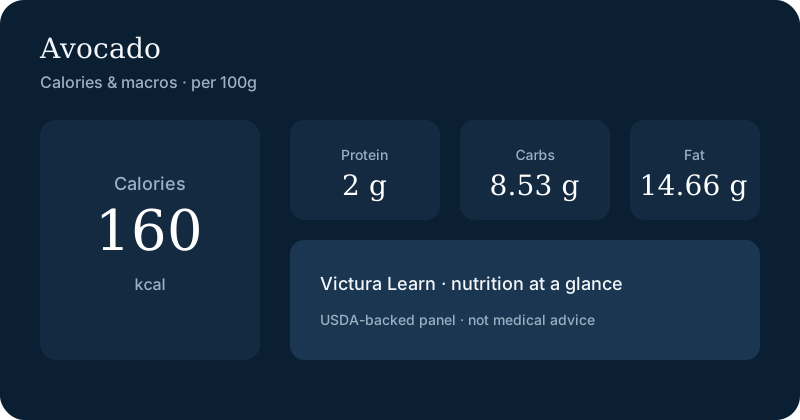
A medium avocado contains around 240 calories, while 100g contains about 160 calories. Per 100g you get about 8.53g carbs and 2g protein. Glycemic index is around 15.
Avocado is a whole food with approximately 160 calories per 100g, tracked in Victura for macro-aware meal logging.
- Calories (medium avocado)
- 240 kcal
- Calories (100g)
- 160 kcal
- Carbs (100g)
- 8.53g
- Protein (100g)
- 2.0g
- Serving reference
- 150g · medium avocado
- Glycemic index
- 15

Where the calories come from
Per 100g · protein & carbs 4 kcal/g, fat 9 kcal/g
- Protein2 g · 4.6%
- Carbs8.5 g · 19.6%
- Fat14.7 g · 75.8%
Serving calculator
How much did you eat or drink — Avocado?
160
Calories
2.0g
Protein
8.5g
Carbs
14.7g
Fat
Nutrition facts
per 100g · Source: USDA FoodData Central (seeded Phase 0)
160 kcal
Calories
Vitamins
- Vitamin K: 21mcg
Minerals
- Potassium: 485mg
Scientific explanation
Research-backedAvocado provides a unique nutritional profile that sets it apart from almost all other fruits. While most fruits are primarily composed of carbohydrates, an avocado is characterized by its high content of healthy monounsaturated fats, specifically oleic acid. According to USDA FoodData Central, a 100g serving of raw avocado provides approximately 160 calories (kcal), 14.66g of total fat, 8.53g of carbohydrates, 2.0g of protein, and an impressive 6.7g of dietary fiber. This high fiber content means that the net carbohydrate impact is exceptionally low, at only about 1.83g per 100g, making it highly compatible with ketogenic and low-carbohydrate diets.
Beyond macronutrients, avocados are a dense source of essential micronutrients. They are particularly rich in potassium, providing 485mg per 100g (about 10% of the Daily Value), which is higher than the potassium content found in an equivalent weight of bananas. Potassium is a critical electrolyte that supports cardiovascular health, fluid balance, and blood pressure regulation. Additionally, avocados contain 21.0mcg of Vitamin K per 100g (18% of the Daily Value), which plays a vital role in blood clotting and bone metabolism. They also provide notable amounts of folate, Vitamin E, Vitamin C, and B-vitamins.
The glycemic index (GI) of avocado is estimated to be extremely low, around 15. This minimal glycemic impact is due to the combination of high dietary fiber, abundant healthy fats, and negligible simple sugars (only 0.66g of sugar per 100g). When consumed, avocados promote a slow, stable glucose response, preventing the rapid insulin spikes associated with high-carbohydrate foods. This makes them an excellent dietary component for individuals managing type 2 diabetes or insulin resistance.

Community insights
Community insightAmong Victura meal logs, avocado appears frequently as a versatile, nutrient-dense addition to a wide variety of dietary patterns. Users commonly log it as a portable snack, a creamy base for morning smoothies, or a satisfying topping for whole-grain toast and salads. A recurring theme in community feedback is satiety: users who pair avocado with lean proteins (such as eggs or chicken) or high-fiber grains report experiencing prolonged fullness and steadier energy levels throughout the afternoon, avoiding the typical post-meal energy crashes.
In addition to its nutritional benefits, the community frequently shares practical preparation strategies. Because avocados ripen quickly due to ethylene gas production, users recommend storing firm avocados at room temperature and transferring them to the refrigerator once they reach peak ripeness to extend their shelf life by several days. For meal prep, adding a squeeze of fresh lemon or lime juice to mashed avocado helps prevent enzymatic browning, keeping dishes visually appealing and fresh for longer periods.
Pros
- Avocado is a whole food with measurable macro nutrients
- Rich in heart-healthy monounsaturated fats and dietary fiber
- Extremely low glycemic index and minimal simple sugars
Cons
- Portion size still matters for calorie goals due to high energy density
- Enzymatic browning occurs quickly once cut and exposed to oxygen
Best time to eat
Pair with protein and fiber for balanced meals.
Good windows
- With main meals
- Post-workout recovery meals
Consider avoiding
- Very large portions without activity
Diet compatibility
Weight loss
Use caution
At 160 kcal and 6.7g fiber per 100g, this food is energy-dense - watch portions.
Keto
Friendly
Net carbs ~1.8g per 100g - compatible with strict keto.
Diabetic friendly
Friendly
GI 15 with 0.7g sugar - generally blood-sugar friendly in moderation.
Frequently asked questions
People also ask
Is an avocado healthy?
Yes — an avocado is a whole food with measurable nutrients. Healthiness depends on overall diet, portions, and your goals. Estimated GI is 15.
Can I eat an avocado every day?
Most people can include an avocado daily as part of a balanced diet, as long as total calories and carbs fit their plan.
Are Avocados good for weight loss?
At 160 kcal and 6.7g fiber per 100g, this food is energy-dense - watch portions.
How many calories are in an avocado?
A typical medium serving of avocado has about 160 calories, while 100g contains about 160 calories (USDA reference).
Are Avocados good before a workout?
Avocados can work before activity when you want easy carbs; pair an avocado with protein if your session is long.
Are Avocados high in sugar?
Avocados contain about 0.7g sugar per 100g — mostly natural sugars when whole.
Is avocado keto-friendly?
Absolutely. Avocado is widely considered one of the best whole foods for a ketogenic diet. With 8.53g of total carbohydrates per 100g and 6.7g of dietary fiber, a 100g serving contains only about 1.83g of net carbohydrates. This exceptionally low net carb count, paired with 14.66g of healthy fats, allows individuals on a strict keto diet to meet their high-fat macro requirements easily without risking kicking themselves out of ketosis.
What is the glycemic index of avocado?
The glycemic index (GI) of avocado is estimated to be approximately 15, which is classified as very low. Because avocados contain minimal carbohydrates and sugars, along with a high concentration of dietary fiber and monounsaturated fats, they are digested slowly. This slow digestion prevents rapid rises in blood glucose, resulting in a flat, highly stable glycemic response after consumption.
Is avocado safe for people with diabetes?
Yes, avocados are highly recommended and safe for individuals managing diabetes. Their extremely low glycemic index of 15 and minimal sugar content (0.66g per 100g) mean they do not cause blood sugar spikes. Furthermore, the monounsaturated fats in avocados can help improve insulin sensitivity and support overall cardiovascular health, which is a critical consideration for managing diabetes-related complications.
How many calories does a whole avocado have?
A whole medium-sized raw avocado (with the skin and seed removed, leaving about 150g of edible flesh) contains approximately 240 calories. If you are consuming a larger variety, such as a Haas or a Florida avocado, the weight and calorie count may vary. For precise tracking, it is always best to weigh the edible portion in grams: every 100g of raw avocado consistently provides 160 calories.
How we review this guide
- Written by
- Victura Nutrition Team
- Reviewed by
- Victura Editorial Review
- Reference sources
- 4
- Last updated
- Aug 10, 2026
References
Ready to track your meals with AI?
Victura scans your plate, logs macros automatically, and coaches you toward your goals — halal, keto, diabetic-friendly, and more.