
Smoothie
Complete smoothie nutrition breakdown with 60 kcal per 100g, glycemic index, and diet compatibility.
Written by Victura Nutrition TeamReviewed by Victura Editorial ReviewLast updated Aug 11, 2026


Quick answer
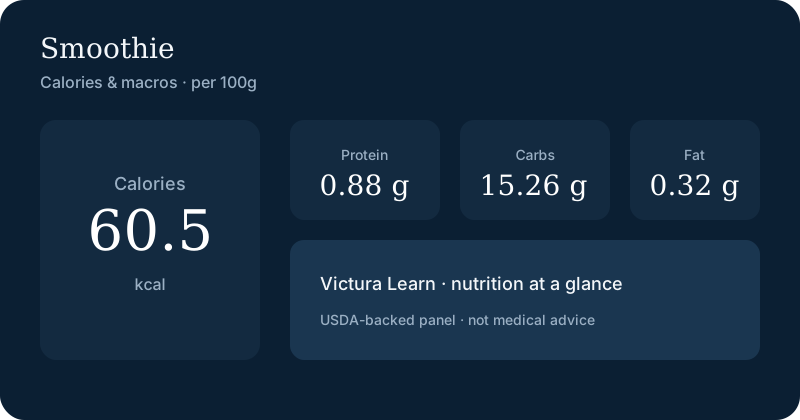
A 100g serving of smoothie provides about 60 kcal. Per 100g you get about 15.26g carbs and 0.88g protein. Glycemic index is around 45.
Smoothie is a whole food with approximately 60 calories per 100g, tracked in Victura for macro-aware meal logging.
- Calories (100g serving)
- 60 kcal
- Carbs (100g)
- 15.26g
- Protein (100g)
- 0.88g
- Serving reference
- 100g · 100g serving
- Glycemic index
- 45
Scientific Nutrition Profile & Blending Dynamics
Research-backedFrom a metabolic perspective, a smoothie is a liquid or semi-liquid composite of whole foods whose nutritional value is entirely determined by its constituent ingredients. A standard fruit-based reference smoothie (using a strawberry and banana raw puree proxy) provides approximately 60.5 kcal per 100g, with 0.88g of protein, 15.26g of carbohydrates, 0.32g of fat, and 2.3g of dietary fiber. While blending mechanicalizes the first stage of digestion by breaking down plant cell walls, it does not destroy the dietary fiber itself. However, because liquid calories bypass some of the oral mastication signals that trigger satiety hormones like GLP-1 and peptide YY, liquid meals can be consumed much faster than their solid equivalents, potentially leading to a higher acute caloric intake. To optimize glycemic control and satiety, smoothies should be formulated intentionally by incorporating structural whole foods that slow gastric emptying. Below are 8 specific whole food ingredients with recommended portion sizes to optimize your smoothie's nutritional profile: 1. Baby Spinach (30g / approx. 1 cup): Adds non-heme iron, folate, and chlorophyll with negligible impact on taste or glycemic load. 2. Chia Seeds (12g / approx. 1 tablespoon): Provides 4g of dietary fiber and essential alpha-linolenic acid (omega-3) to slow glucose absorption. 3. Whey Protein Isolate (30g / approx. 1 scoop): Delivers 25g of highly bioavailable protein to preserve lean mass and stimulate satiety. 4. Medium Banana (118g / 1 medium): Offers 358mg of potassium and natural starches for texture, though portion control is key for carbohydrate management. 5. Wild Blueberries (75g / approx. 0.5 cup): Rich in anthocyanins and polyphenols that support cognitive health and reduce oxidative stress. 6. Plain Low-Fat Greek Yogurt (150g / approx. 0.5 cup): Supplies calcium, probiotics, and 15g of protein to create a creamy, emulsified base. 7. Hass Avocado (50g / approx. 1/3 medium): Contributes monounsaturated oleic acid, which enhances the absorption of fat-soluble vitamins (A, D, E, K) from leafy greens. 8. Unsweetened Almond Milk (240ml / 1 cup): Serves as an excellent low-calorie liquid vehicle (approx. 30 kcal) to facilitate smooth blending without adding simple sugars.
Community Insights & Real-World Tracking
Community insightAnalysis of anonymized meal logs within the Victura platform indicates that smoothies are highly popular among active users, particularly as post-workout recovery options and quick breakfast solutions. However, a common pitfall identified in the data is 'portion creep'—where users inadvertently double their target calorie intake by adding unmeasured quantities of calorie-dense ingredients like nut butters, honey, and full-fat milks. Users who utilize digital scales to weigh ingredients like avocados and seeds report significantly better alignment with their daily macronutrient targets. Furthermore, community members who transition from pure fruit smoothies to protein-and-fiber-fortified green smoothies report sustained energy levels for 3 to 4 hours, avoiding the mid-morning energy crashes often associated with high-glycemic, fruit-only blends consumed on an empty stomach.
References
Frequently asked questions
People also ask
Is a smoothie healthy?
Yes, a smoothie can be highly nutritious, but its health profile depends entirely on its ingredients and portion sizes. A home-blended smoothie containing whole fruits, leafy greens, and a clean protein source provides essential vitamins, minerals, and dietary fiber. However, commercially prepared smoothies often contain added sugars, fruit juice concentrates, and syrups, which can significantly elevate calories and blood glucose levels. To ensure your smoothie is healthy, focus on whole-food ingredients, control your portions, and balance carbohydrates with protein and healthy fats.
Can I drink a smoothie every day?
Most individuals can safely enjoy a smoothie daily as part of a structured, balanced diet. To make daily consumption sustainable, vary your ingredients to ensure a wide spectrum of micronutrients—for example, rotating spinach with kale, or blueberries with raspberries. It is also crucial to account for the liquid calories in your daily macronutrient budget. If your daily smoothie contains high-calorie additions like nut butters or seeds, treat it as a complete meal replacement rather than a casual beverage alongside solid food.
Are smoothies good for weight loss?
Smoothies can be an effective tool for weight loss when designed to promote satiety while maintaining a calorie deficit. A weight-loss-friendly smoothie should prioritize high-volume, low-calorie ingredients like leafy greens, water or unsweetened almond milk, and a high-quality protein source (such as Greek yogurt or protein powder) combined with soluble fiber (like chia or flax seeds). This combination slows digestion and helps prevent hunger. Avoid adding large amounts of dried fruits, honey, or excessive nut butters, which can easily turn a weight-loss smoothie into a high-calorie meal.
How many calories are in a smoothie?
The calorie content of a smoothie varies dramatically based on its composition. A basic fruit smoothie base (using a strawberry and banana raw puree proxy) contains approximately 60.5 calories (kcal) per 100g according to USDA reference data. A standard 300ml serving of this simple fruit base contains roughly 180 calories. However, if you add ingredients like a tablespoon of peanut butter (95 kcal), a scoop of protein powder (120 kcal), and a medium banana (105 kcal), the total can easily exceed 500 calories. Always measure individual ingredients to calculate an accurate total.
Are smoothies good before a workout?
Smoothies make an excellent pre-workout meal because blending pre-digests the ingredients, making them easier for your gastrointestinal tract to process during exercise. For a workout occurring within 60 to 90 minutes, focus on easily digestible carbohydrates (such as bananas or oats) with a moderate amount of protein to provide sustained glycogen release. Keep fat and fiber content relatively low in your pre-workout smoothie, as high amounts of these nutrients slow gastric emptying and can cause cramping or sluggishness during intense physical activity.
Are smoothies high in sugar?
Smoothies can be high in sugar, but there is a critical distinction between naturally occurring sugars from whole fruits and added sugars from syrups or juices. A standard fruit-based smoothie contains about 8.56g of natural sugar per 100g. When you blend whole fruits, the sugar remains bound within the cellular matrix and is accompanied by dietary fiber, which helps moderate the glycemic response. To minimize the sugar impact, limit the use of fruit juices as a liquid base, cap your fruit portions to 1 cup per serving, and incorporate low-sugar vegetables like spinach, zucchini, or cucumber.
Is a smoothie keto-friendly?
Standard fruit-based smoothies are not keto-friendly, as they typically contain around 15.26g of carbohydrates (and approximately 12.96g of net carbs) per 100g, which can easily exceed the daily carbohydrate limit of a ketogenic diet. However, you can easily formulate a keto-compliant smoothie by substituting high-sugar fruits with low-carb alternatives. Use a base of unsweetened almond milk or water, add healthy fats like avocado or MCT oil, incorporate leafy greens, and use a low-carb protein powder sweetened with stevia or erythritol.
What is the glycemic index of a smoothie?
The glycemic index (GI) of a basic, unsweetened fruit smoothie is estimated to be approximately 45, placing it in the low-GI category. This means it causes a relatively gradual rise in blood glucose compared to pure glucose or refined carbohydrates. However, the glycemic response can be further optimized. Adding protein (such as whey or collagen), healthy fats (such as avocado or almond butter), and soluble fiber (such as chia seeds) blunts the insulin response and slows down the absorption of fructose, resulting in highly stable energy levels.
Is a smoothie safe for people with diabetes?
Yes, smoothies can be safely enjoyed by individuals with diabetes, provided they are carefully constructed to prevent blood sugar spikes. A diabetes-friendly smoothie should avoid fruit juices, honey, and high-glycemic fruits like mangoes or pineapples. Instead, build the smoothie using a low-glycemic base (like unsweetened soy or almond milk), plenty of non-starchy vegetables (like spinach or kale), a moderate portion of berries, and a strong protein and healthy fat component to slow glucose absorption and improve insulin sensitivity.
How we review this guide
- Written by
- Victura Nutrition Team
- Reviewed by
- Victura Editorial Review
- Reference sources
- 4
- Last updated
- Aug 11, 2026
Ready to track your meals with AI?
Victura scans your plate, logs macros automatically, and coaches you toward your goals — halal, keto, diabetic-friendly, and more.