
Strawberries Nutrition Facts
A comprehensive, evidence-based guide to the calories, macronutrients, and health benefits of fresh strawberries.
Written by Victura Nutrition TeamReviewed by Victura Editorial ReviewLast updated Aug 17, 2026
32
Calories
0.7g
Protein
7.7g
Carbs
Generally yes
Is it healthy?
per 100g · per panel values
Track this food in VicturaQuick answer
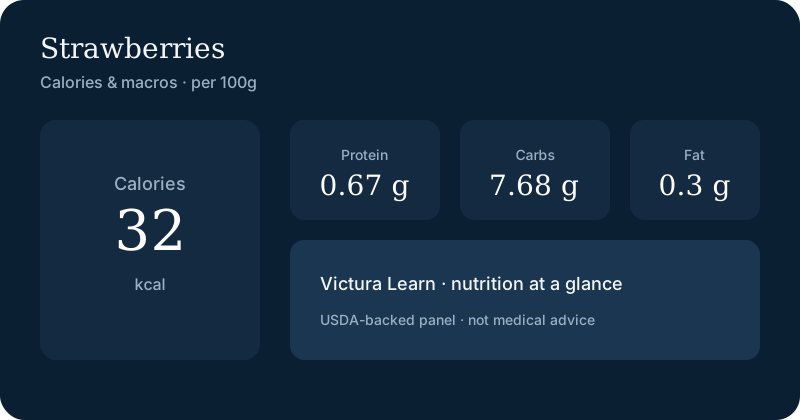
A 100g serving of strawberries provides about 32 kcal. Per 100g you get about 7.68g carbs and 0.67g protein.
Strawberries is a whole food with approximately 32 calories per 100g, tracked in Victura for macro-aware meal logging.
- Calories (100g serving)
- 32 kcal
- Carbs (100g)
- 7.68g
- Protein (100g)
- 0.67g
- Serving reference
- 100g · 100g serving

Where the calories come from
Per 100g · protein & carbs 4 kcal/g, fat 9 kcal/g
- Protein0.7 g · 7.4%
- Carbs7.7 g · 85.1%
- Fat0.3 g · 7.5%
Serving calculator
How much did you eat or drink — Strawberries?
32
Calories
0.7g
Protein
7.7g
Carbs
0.3g
Fat
Nutrition facts
per 100g · Source: USDA FoodData Central
32 kcal
Calories
Scientific explanation
Research-backedStrawberries provides an exceptional nutritional profile, delivering essential micronutrients with minimal caloric impact. A standard 100g serving of raw strawberries contains just 32 calories, 0.67g of protein, 0.3g of fat, and 7.68g of carbohydrates, of which 2.0g is dietary fiber and 4.89g is natural sugars. This yields a net carbohydrate count of approximately 5.68g, making strawberries highly compatible with low-carb and ketogenic dietary patterns. The high water content (approximately 91%) combined with fiber supports digestive health and promotes satiety, making them an excellent choice for weight management plans. Furthermore, strawberries are rich in bioactive compounds, particularly anthocyanins (which give them their vibrant red color) and vitamin C, which function as potent antioxidants to mitigate oxidative stress and support cardiovascular health. Clinical trials suggest that regular consumption of strawberries may improve endothelial function, reduce LDL cholesterol oxidation, and enhance insulin sensitivity. The presence of ellagic acid and various flavonoids further contributes to their anti-inflammatory properties, helping to neutralize free radicals and support cellular health. Additionally, strawberries are an excellent source of manganese, providing about 16% of the Daily Value per 100g, which plays a critical role in bone formation, blood clotting, and reducing inflammation. Folate (Vitamin B9) is also present in notable amounts, supporting normal tissue growth and cellular function, making this fruit highly beneficial during periods of rapid growth or pregnancy. From a metabolic perspective, the glycemic index (GI) of strawberries is relatively low, estimated at around 40. This low GI, combined with a low glycemic load, means that strawberries cause a slow, gradual rise in blood glucose levels rather than the sharp spikes associated with high-glycemic fruits or refined carbohydrates. This makes them an ideal sweet option for individuals managing type 2 diabetes or insulin resistance. Research indicates that the polyphenols in strawberries may slow down the digestion of starch and limit the spike in blood sugar after a carbohydrate-rich meal, particularly when consumed alongside other foods. The dietary fiber content, specifically soluble fiber like pectin, further slows gastric emptying and glucose absorption in the small intestine. Consequently, incorporating strawberries into daily meals supports sustained energy levels and helps prevent the subsequent energy crashes often triggered by high-sugar snacks.

Community insights
Community insightData from Victura anonymized meal logs indicates that strawberries are one of the most frequently logged fruits, highly favored for their versatility and low glycemic impact. Users commonly integrate them into pre-workout meals, morning oatmeal, or Greek yogurt bowls to add natural sweetness without causing rapid blood glucose spikes. For individuals tracking macronutrients, a typical medium strawberry (approx. 12g) provides only about 4 calories, allowing for easy portion control. Our community insights show that incorporating strawberries into a balanced diet helps satisfy sweet cravings while maintaining a caloric deficit. Many users report using strawberries as a high-volume, low-calorie snack to combat hunger during weight loss phases. In culinary applications, they pair exceptionally well with healthy fats and proteins—such as almonds, walnuts, chia seeds, or cottage cheese—which further stabilizes blood sugar levels and enhances the absorption of fat-soluble nutrients. Meal preppers frequently log frozen strawberries for convenient use in protein shakes and smoothies, noting that freezing preserves the nutritional integrity, particularly the vitamin C and antioxidant content, of the fresh fruit. By logging these entries in the Victura app, users can easily monitor their daily micronutrient targets, ensuring they meet their vitamin C and fiber goals while staying within their personalized macronutrient limits.
Pros
Cons
Best time to eat
Good windows
Consider avoiding
Diet compatibility
Weight loss
Friendly
Consult your healthcare provider for personalized guidance.
Keto
Friendly
Consult your healthcare provider for personalized guidance.
Diabetes
Friendly
Consult your healthcare provider for personalized guidance.
Frequently asked questions
People also ask
Is a strawberries healthy?
Yes — a strawberries is a whole food with measurable nutrients. Healthiness depends on overall diet, portions, and your goals.
Can I eat a strawberries every day?
Most people can include a strawberries daily as part of a balanced diet, as long as total calories and carbs fit their plan.
Are Strawberrieses good for weight loss?
Strawberrieses can fit a calorie-controlled diet when portions are measured.
How many calories are in a strawberries?
A typical medium serving of strawberries has about 32 calories, while 100g contains about 32 calories (USDA reference).
Are Strawberrieses good before a workout?
Strawberrieses can work before activity when you want easy carbs; pair a strawberries with protein if your session is long.
Are Strawberrieses high in sugar?
Strawberrieses contain about 4.9g sugar per 100g — mostly natural sugars when whole.
What is the glycemic index of strawberries?
Strawberries have a low glycemic index (GI) of approximately 40. This means they cause a slow, gradual rise in blood sugar levels rather than a rapid spike, making them highly suitable for diabetic-friendly and low-glycemic diets.
How much vitamin C is in 100g of strawberries?
A 100g serving of raw strawberries provides 58.8 mg of vitamin C, which meets approximately 98% of the Daily Value (DV) for this essential antioxidant, supporting immune function and collagen synthesis.
How we review this guide
- Written by
- Victura Nutrition Team
- Reviewed by
- Victura Editorial Review
- Reference sources
- 4
- Last updated
- Aug 17, 2026
References
Ready to track your meals with AI?
Victura scans your plate, logs macros automatically, and coaches you toward your goals — halal, keto, diabetic-friendly, and more.