
Sweet Potatoes Nutrition Facts
Calories, carbs, fiber, vitamin A, potassium, and glycemic index for raw sweet potatoes, with US portion sizes and healthy prep tips.
Written by Victura Nutrition TeamReviewed by Victura Editorial ReviewLast updated Nov 9, 2026
86
Calories
1.6g
Protein
20.1g
Carbs
Generally yes
Is it healthy?
per 100g · per panel values
Track this food in VicturaQuick answer
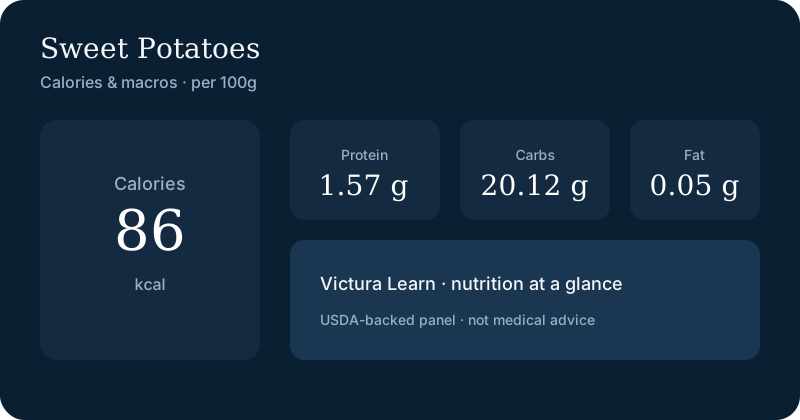
A 100g serving of sweet potatoes provides about 86 kcal. Per 100g you get about 20.12g carbs and 1.57g protein. Glycemic index is around 54.
Sweet Potatoes is a whole food with approximately 86 calories per 100g, tracked in Victura for macro-aware meal logging.
- Calories (100g serving)
- 86 kcal
- Carbs (100g)
- 20.12g
- Protein (100g)
- 1.57g
- Serving reference
- 100g · 100g serving
- Glycemic index
- 54
Key takeaways
- A medium sweet potato (150 g / 5.3 oz) has about 129 calories; per 100 g, 86 calories.
- Sweet potatoes provide 3 g fiber and 709 mcg RAE vitamin A per 100 g.
- The glycemic index is 54, a medium value affected by portion and cooking method.
- They fit weight-loss and diabetic-friendly patterns in moderate portions, but not standard keto.
- Choose baked, boiled, or steamed sweet potatoes and limit added sugar, syrup, and heavy toppings.

Where the calories come from
Per 100g · protein & carbs 4 kcal/g, fat 9 kcal/g
- Protein1.6 g · 7.2%
- Carbs20.1 g · 92.3%
- Fat0.1 g · 0.5%
Serving calculator
How much did you eat or drink — Sweet Potatoes?
86
Calories
1.6g
Protein
20.1g
Carbs
0.1g
Fat
Nutrition facts
per 100g · Source: USDA FoodData Central
86 kcal
Calories
Vitamins
- Vitamin A: 709mcg RAE
Minerals
- Potassium: 337mg
Scientific explanation
Research-backedSweet potatoes provide about 129 calories in a medium sweet potato (150 g / 5.3 oz) and 86 calories per 100 g (3.5 oz) raw, according to the USDA FoodData Central panel. A medium portion is a practical starting point for meal planning; per-100 g numbers make comparisons easier across labels and recipes.
🔥 Quick Answer: Calories in Sweet Potatoes
| Nutrient | Per 100 g (3.5 oz), raw | Per medium sweet potato (150 g / 5.3 oz), raw* |
|---|---|---|
| Calories | 86.0 kcal | 129 kcal |
| Protein | 1.57 g | 2.4 g |
| Carbohydrates | 20.12 g | 30.2 g |
| Fat | 0.05 g | 0.1 g |
| Fiber | 3.0 g | 4.5 g |
| Sugar | 4.18 g | 6.3 g |
| Vitamin A | 709 mcg RAE (79% DV) | 1,064 mcg RAE |
| Potassium | 337 mg (7% DV) | 506 mg |
*Calculated from the USDA per-100 g panel for raw, unprepared sweet potato. Whole-potato weights vary, so use a scale when precision matters.
The quick answer is that sweet potatoes are a moderate-calorie, carbohydrate-rich root vegetable with useful fiber and very high vitamin A. The medium-portion column is an estimate for a whole sweet potato; actual weights can be higher or lower.
🔥 Calories, Carbs, and Fiber
Sweet potatoes are not a low-carb food, but they are a fiber-containing carbohydrate. Per 100 g (3.5 oz), they have 20.12 g carbohydrates, 3.0 g fiber, and 4.18 g sugar. That works out to about 17.1 g net carbs per 100 g (3.5 oz), or about 25.7 g net carbs in a medium 150 g (5.3 oz) sweet potato.
- Calories: 86.0 kcal per 100 g (3.5 oz), or about 129 kcal per medium 150 g (5.3 oz) portion.
- Protein and fat: low at 1.57 g protein and 0.05 g fat per 100 g (3.5 oz).
- Fiber: 3.0 g per 100 g (3.5 oz), which can support satiety and fits a weight-loss pattern when portions are managed.
- Keto: not a standard keto food because net carbs are high for typical keto targets.
For weight management, the calorie density is moderate and the fiber helps. The toppings and cooking fat usually change the meal more than the sweet potato itself. Use the calorie calculator if you need to fit a portion into a daily target.

🍞 Vitamin A, Potassium, and Glycemic Index
Sweet potatoes are best known for vitamin A. The USDA panel lists 709 mcg RAE per 100 g (3.5 oz), or 79% DV, from carotenoids. They also provide 337 mg potassium per 100 g (3.5 oz), about 7% DV. These nutrients make sweet potatoes more than a plain starch in a balanced plate.
The provided glycemic index is 54, which is a medium-GI value. GI is not fixed: cooking method, cooling, portion size, and accompanying protein or fat can change the blood-sugar response. People with diabetes should treat sweet potatoes as a carbohydrate to portion and monitor, not as a free food.
Key takeaway: Sweet potatoes are a medium-GI, fiber-rich carbohydrate; portion size and cooking method matter more than the food alone.
⚖️ Sweet Potatoes vs White Potatoes
Sweet potatoes and white potatoes are both carbohydrate foods, but they are not nutritionally identical. Sweet potatoes stand out for vitamin A, while white potatoes vary by variety and preparation. Compare them using the same cooking method and the same portion weight rather than comparing a plain boiled potato with a fried or heavily topped one.
- Sweet potatoes usually win on vitamin A because of their carotenoid content.
- White potatoes can be part of healthy meals too; the main issue is often added fat, salt, or sugar.
- For blood sugar, total carbohydrate and portion matter more than the color of the flesh.
- For weight loss, choose baked, boiled, or steamed versions and keep toppings simple.
A practical comparison is 100 g (3.5 oz) cooked plain sweet potato versus 100 g (3.5 oz) cooked plain white potato, then adjust for your own portion. See the glycemic index guide for more on pairing carbohydrates with protein and fiber.
✅ Healthy Ways to Eat Sweet Potatoes
Sweet potatoes can be baked, boiled, steamed, roasted, or microwaved. Leave the skin on when possible for extra fiber, and season with herbs, spices, citrus, or a little olive oil instead of marshmallow, syrup, or heavy butter. A medium 150 g (5.3 oz) sweet potato plus a protein source is a simple meal template.
- Bake or steam cubes and add to grain bowls with beans, chicken, or tofu.
- Mash cooked sweet potato with garlic and olive oil as a side dish.
- Slice into rounds and roast with paprika or cumin.
- Add leftover sweet potato to soups, curries, and breakfast hash.
For weight loss, keep the portion to about 100-150 g (3.5-5.3 oz) and fill half the plate with vegetables. For people managing blood sugar, pair sweet potato with protein, fat, or fiber and monitor portions. It is not keto friendly at standard targets. The weight-loss food guide and Victura app can help with portion tracking.
Community insights
Community insight🍽️ How People Use Sweet Potatoes in Daily Meals
In Victura anonymized meal logs, sweet potatoes appear most often as a dinner side, a meal-prep starch, and a base for bowls. Community members commonly log roasted cubes, whole baked sweet potatoes, and mashed sweet potato as a swap for rice or white potatoes. The appeal is practical: one medium 150 g (5.3 oz) sweet potato is easy to batch-cook and reheat.
Many users pair sweet potatoes with protein to make the meal more filling. Common combinations include chicken and broccoli, black beans and salsa, ground turkey and spinach, or eggs at breakfast. Others use sweet potato in soups and curries when they want a starchy vegetable that holds its shape.
🍽️ Popular Prep and Pairing Habits
Community prep habits tend to focus on flavor without heavy sugar. People report using paprika, cumin, garlic, chili flakes, lime, or Greek yogurt instead of marshmallow or syrup. Roasting is popular for texture, while steaming and boiling are common when people want a softer mash or a faster weeknight side.
- Batch-bake whole sweet potatoes, then refrigerate portions for 3 to 4 days.
- Cube and roast sweet potato with olive oil and spices for bowls.
- Mash with garlic and a little butter or olive oil instead of brown sugar.
- Add diced sweet potato to lentil soup or turkey chili.
- Use leftover sweet potato in breakfast hash with eggs.
Portion comments in the community often center on 100-150 g (3.5-5.3 oz) portions for weight-loss goals. People following keto usually avoid sweet potatoes or treat them as a small, planned carb because net carbs are too high for standard keto. Diabetic-friendly eaters frequently mention pairing sweet potato with protein and checking portions.
🥔 What to Watch
Sweet potatoes are rarely the problem on their own; toppings and cooking fat often are. A baked sweet potato with butter, brown sugar, and marshmallow can become a dessert-like side, while a plain steamed sweet potato with herbs stays moderate in calories. Community logs also show that sweet potato fries are not automatically healthier than regular fries, especially when deep-fried or heavily salted.
For everyday eating, treat sweet potatoes as a carbohydrate serving, not a free vegetable. Count the portion, add a protein, and use the skin when you can. If you are tracking weight, calories, or blood sugar, the Victura meal planner can help you log the actual weight and toppings instead of guessing.
Pros
Cons
Best time to eat
Good windows
Consider avoiding
Diet compatibility
Weight loss
Friendly
Consult your healthcare provider for personalized guidance.
Keto
Friendly
Consult your healthcare provider for personalized guidance.
Diabetes
Friendly
Consult your healthcare provider for personalized guidance.
Frequently asked questions
People also ask
Is a sweet potatoes healthy?
Yes — a sweet potatoes is a whole food with measurable nutrients. Healthiness depends on overall diet, portions, and your goals. Estimated GI is 54.
Can I eat a sweet potatoes every day?
Most people can include a sweet potatoes daily as part of a balanced diet, as long as total calories and carbs fit their plan.
Are Sweet Potatoeses good for weight loss?
Sweet potatoeses can fit a calorie-controlled diet when portions are measured.
How many calories are in a sweet potatoes?
A typical medium serving of sweet potatoes has about 86 calories, while 100g contains about 86 calories (USDA reference).
Are Sweet Potatoeses good before a workout?
Sweet potatoeses can work before activity when you want easy carbs; pair a sweet potatoes with protein if your session is long.
Are Sweet Potatoeses high in sugar?
Sweet potatoeses contain about 4.2g sugar per 100g — mostly natural sugars when whole.
Are sweet potatoes healthy?
Yes, for most people. Per 100 g (3.5 oz), sweet potatoes provide 86 calories, 3.0 g fiber, 709 mcg RAE vitamin A, and 337 mg potassium. They are a nutrient-dense carbohydrate, but health depends on portion and preparation; baked or steamed with herbs is a better default than heavy sugar or fried toppings.
Can you eat sweet potatoes every day?
For most people, yes, if the portion fits overall calorie and carbohydrate needs. Rotate sweet potatoes with other vegetables and proteins instead of making them the only starch. People with diabetes or specific carb limits should plan portions with their care team.
Are sweet potatoes good for weight loss?
They can be. Sweet potatoes have 86 calories per 100 g (3.5 oz) and 3.0 g fiber per 100 g, which can support fullness. A medium 150 g (5.3 oz) sweet potato has about 129 calories before toppings. Weight loss still depends on total intake, so measure portions and avoid sugary or high-fat toppings.
How many calories are in one sweet potato?
Using the USDA raw per-100 g panel, a medium sweet potato (150 g / 5.3 oz) has about 129 calories. A smaller 100 g (3.5 oz) sweet potato has 86 calories. Actual calories vary with weight and cooking method, and toppings add more.
Should you eat sweet potatoes before a workout?
Sweet potatoes can work well before exercise because they provide carbohydrate and potassium. A practical pre-workout portion is 100-150 g (3.5-5.3 oz), eaten 1 to 2 hours before training if tolerated. Keep added fat low if you are sensitive to slow digestion.
Are sweet potatoes high in sugar?
Sweet potatoes contain 4.18 g sugar per 100 g (3.5 oz), which is moderate. Most of their carbohydrate is starch, not sugar. A medium 150 g (5.3 oz) sweet potato has about 6.3 g sugar. Added toppings are often the bigger sugar source.
How we review this guide
- Written by
- Victura Nutrition Team
- Reviewed by
- Victura Editorial Review
- Reference sources
- 6
- Last updated
- Nov 9, 2026
References
- USDA FoodData Central: Sweet potato, raw, unprepared (FDC ID 168482)(usda)
- NIH Office of Dietary Supplements: Vitamin A and Carotenoids Fact Sheet for Health Professionals(nih_ods)
- Atkinson et al. International tables of glycemic index and glycemic load values 2021: a systematic review(pubmed)
- Harvard T.H. Chan School of Public Health: The Nutrition Source, Potatoes(harvard)
Ready to track your meals with AI?
Victura scans your plate, logs macros automatically, and coaches you toward your goals — halal, keto, diabetic-friendly, and more.